
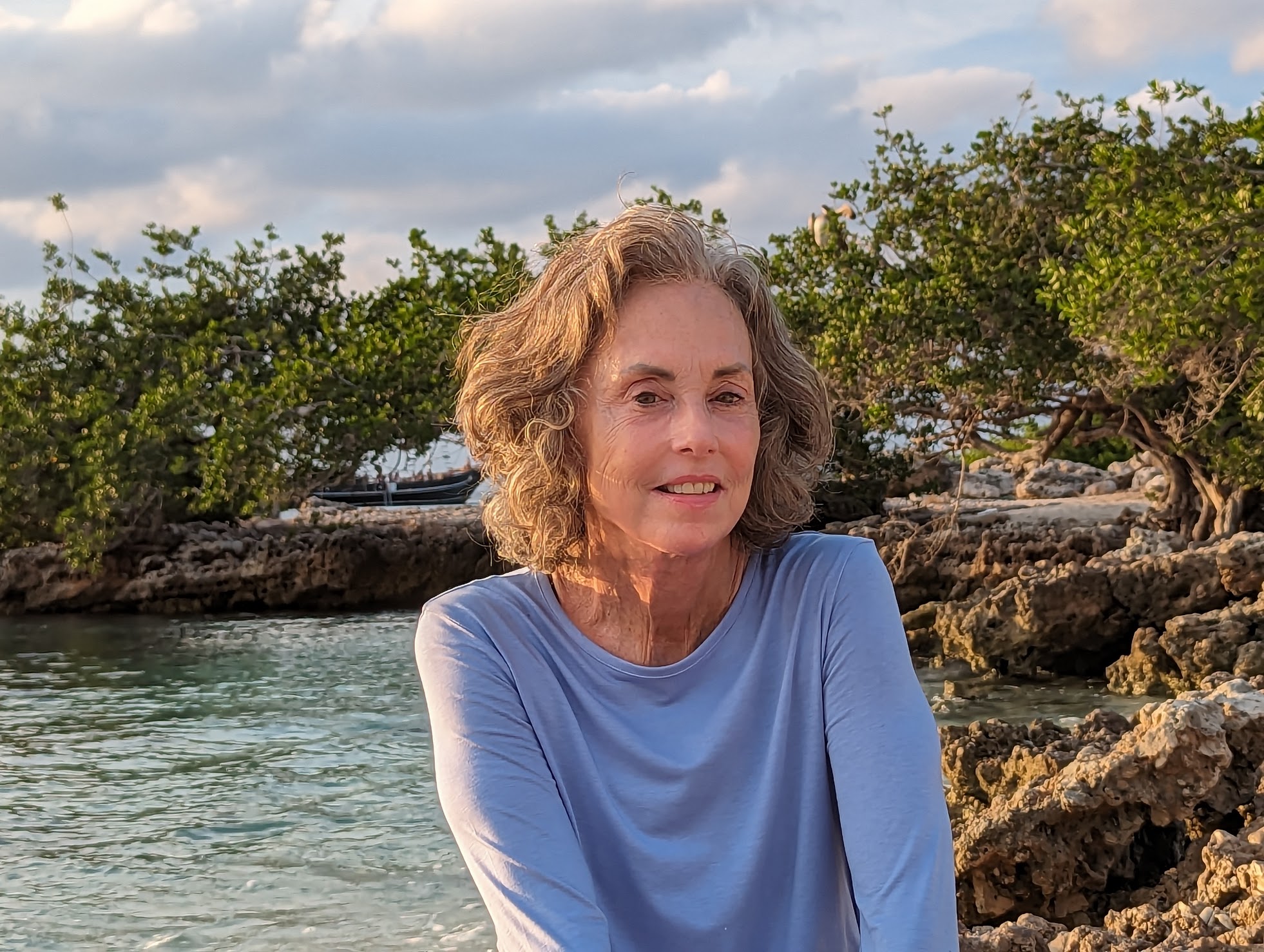
Meet Marcia Heath
What if the story that changed your life wasn’t your own?
Though I always wanted to call myself an author, I took a winding, circuitous route. My path took me to publishing giants Harcourt and Simon & Schuster, where I worked as an editor and a publicist promoting other book authors. I then did brand communications and strategic planning for colleges, Fortune 500 subsidiaries, and nonprofits.
After decades of editing others’ words and chasing success, my body hit the brakes with a rare case of transient global amnesia. I lost my mind, literally. That temporary neurological intervention showed me what I had refused to see: I was living someone else’s idea of a good life. On a reset trip to Aruba, a random conversation under a mango tree changed my trajectory. I spent the next three years writing about two self-effacing surf shop founders who prioritized personal freedom over growth and glory.
What started as a curiosity became a full creative immersion. Writing Little Giant was much more difficult than I imagined. I had to scale back my consulting work, and my husband and I moved to Maine, where we could live more frugally. But finally, after years of frustration and self-doubt, I had found my path from the business realm to a more creative life.
I live near Belfast, Maine, with my husband on a small hill overlooking a field ringed by pine trees. As the bird flies, it’s a 2,100-mile journey south from Maine to Aruba, the remote Caribbean island that’s the setting for Little Giant. Read on if you’re curious about how this story came to be. It all started under a mango tree.
Frequently asked questions
As a non-surfing baby boomer in your sixties, what inspired you to write a book about two Gen-X “surfer dudes” in the Caribbean?
It’s weird, I know. I was drawn to the paradox of Bula’s success. In our “bigger is better” world, here were two friends who built something remarkable by deliberately staying small. Their experience challenges most everything we think or hear about business and personal success.
David and Yair certainly challenged my assumptions: work hard, climb the ladder, find happiness at the top. During Covid, it struck me I had leaned my ladders against the wrong wall. All my corporate striving hadn’t made me happy. I had always wanted to write creatively, but I’d never found the courage or the inspiration. Discovering the Bula story was my rocket fuel. I figured, at my age, it was now or never.
How did you discover the story?
In September 2021, I booked a flight to Aruba to relax and reset after the pandemic. The first afternoon I sat down under a mango tree next to my stepson, David. Driving from the airport to his house, I’d seen all the shuttered shops and empty storefronts. The pandemic had hit Aruba hard. When I asked him how Bula had fared, David turned and looked at me: “Yair and I are fine, Bula is doing great, and we’re still having fun.” Right then I got hooked. Shivers ran down my spine that hot, windy afternoon. It wasn’t a rational decision, but I just knew I’d go to any length to unravel the story of why David and his best friend, Yair, threw away dream careers to start over on a tiny island in the Caribbean.
I wasn’t looking for this story. The story found me.
What can we take away from Bula?
That limitations can become advantages. Bula’s small size and isolated island location forced David and Yair to get creative and focus on their community. They created a business that fit their environment and values: stay friends, have fun, and do something beneficial. It amazes me that, during the twenty years it took them to build Bula, they never lost sight of these three simple ideals. Bula shows us that success doesn’t always mean scaling up. Sometimes it means diving deeper and perfecting the model.
Why do you think the story resonates with readers?
In a world that rewards conformity, it’s a struggle to find the courage to live true to our values. This story shows us it’s possible to create something remarkable without sacrificing our souls.
What surprised you most about writing the book?
How universal the story is. Whether you’re in New England, the Netherlands, or the Caribbean, everyone understands the courage it takes to walk a different path.
Little Giant has been made into a short film. How did that happen?
A collaboration of international partners, including Qredits and the Aruba Tourism Authority, contributed seed funding for a documentary based on the book. Sometimes a story is so visually and emotionally compelling, it almost demands to be made into a film. Two Decades of Bula on the B-Side takes viewers into the vibrant community and beautiful Caribbean setting that gave me inspiration for the book.
Why this book now?
Little Giant gives readers a hopeful alternative to the hustle culture. Lots of people are experiencing high levels of stress and loneliness, especially men. The book shows how David and Yair valued their friendship and work-life balance over a pure profit motive. Together, they created a rewarding life for themselves by making their relationships a priority.
In popular culture, in books and movies, we don’t get to see the inner dynamics of a deep platonic bond like theirs. The book fills that void by showing us all the ways our friendships contribute to our longevity, creativity, and happiness.
What do you hope readers take away from the book and the film?
The courage to trust their instincts. Success doesn’t have to look like everyone else’s version. And it doesn’t always require a grand leap to get there. Sometimes the bravest thing we can do is simply begin…and bring others with us on the adventure.
